
World Thrombosis Day 2026
Learn about World Thrombosis Day 2026, observed on October 13, to raise awareness of blood clots, their causes, symptoms, prevention, and treatment.
World Thrombosis Day 2026
- World Thrombosis Day is observed every year on 13 October to raise awareness about thrombosis, a condition in which blood clots form inside blood vessels and can block normal blood flow.
JOIN OUR TELEGRAM CHANNEL – T.ME/TNPSC_WINNERS

World Thrombosis Day – Important Facts
- Date = 13 October
- First observed = 2014
- Initiative of = International Society on Thrombosis and Haemostasis (ISTH)
- Main objective = To increase public awareness about the causes, risk factors, prevention and treatment of thrombosis.
- Key focus = Venous thromboembolism (VTE), including deep vein thrombosis (DVT) and pulmonary embolism (PE).
What is World Thrombosis Day?
- World Thrombosis Day (WTD) is observed annually to raise awareness about thrombosis, a condition in which blood clots form inside blood vessels and may obstruct normal blood flow.
- Significance of the Date = Commemorates the birth anniversary of Rudolf Virchow (born October 13, 1821), a German physician, pathologist, and anthropologist who pioneered the medical understanding of thrombosis and cellular pathology.
Theme of World Thrombosis Day 2026
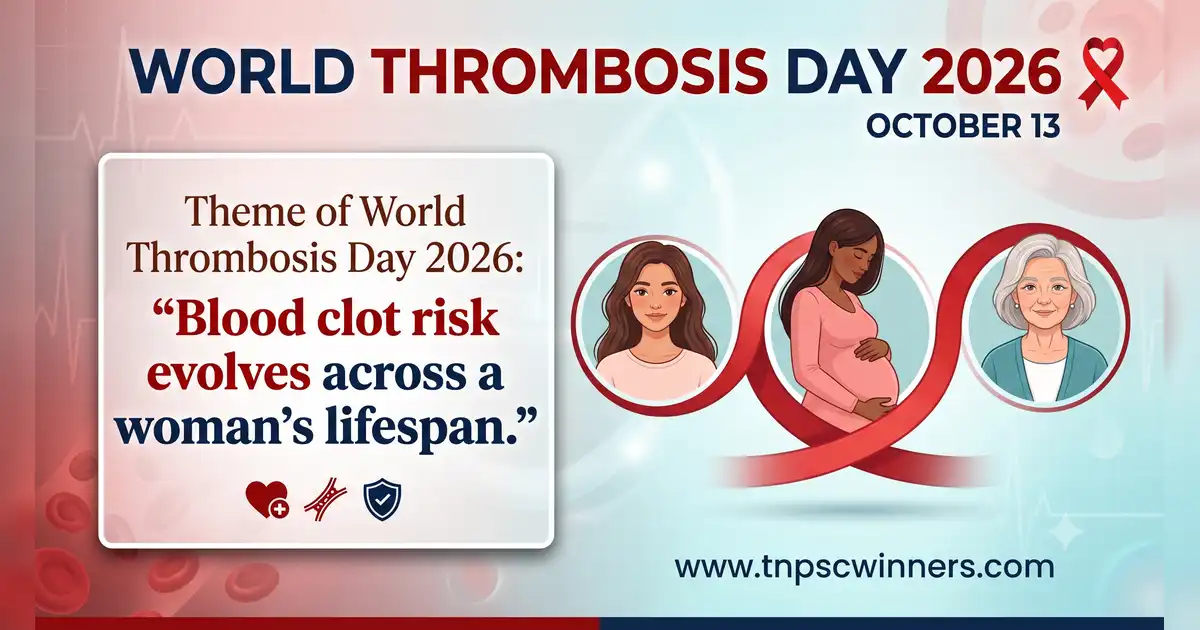
- Theme of World Thrombosis Day 2026 = “Blood clot risk evolves across a woman’s lifespan.”
- The 2026 campaign focuses on women’s health and highlights how blood clot risks can change during reproductive life, pregnancy, the postpartum period and menopause
Important types of thrombosis
- Deep Vein Thrombosis (DVT) = Blood clot forms in a deep vein, usually in the leg.
- Pulmonary Embolism (PE) = A clot blocks an artery in the lungs, often after travelling from a deep vein.
- Arterial thrombosis = A clot forms in an artery and may cause a heart attack or ischaemic stroke.
- Venous thromboembolism (VTE) = A condition encompassing DVT and PE.
The Three Core Factors: Virchow’s Triad
- Endothelial Injury / Vessel Wall Damage = Direct damage to the inner vascular lining (e.g., trauma, surgery, hypertension, catheterization).
- Hemodynamic Changes (Stasis / Turbulence) = Sluggish or disrupted blood flow (e.g., prolonged immobility, long flights, bed rest post-surgery).
- Hypercoagulability (Thrombophilia) = Altered blood composition favoring excessive clotting (e.g., genetic mutations like Factor V Leiden, malignancy, elevated estrogen from oral contraceptives/HRT)
- World Thrombosis Day 2026
Major risk factors
- Prolonged immobility and long-distance travel.
- Surgery and hospitalisation.
- Pregnancy and the period after childbirth.
- Hormonal contraceptives and certain hormone therapies.
- Cancer and some chronic illnesses.
- Obesity, increasing age and previous blood clots.
- Inherited clotting disorders.
Deep Vein Thrombosis (DVT)
- Swelling in one leg.
- Pain or tenderness, often in the calf.
- Warmth or redness of the affected area.
Pulmonary Embolism (PE)
- Sudden shortness of breath.
- Chest pain, especially when breathing deeply.
- Rapid heartbeat or coughing up blood.
Prevention
- Maintain regular physical activity.
- Avoid prolonged periods of sitting; move regularly during long journeys.
- Follow medical advice about clot prevention before and after surgery.
- Assess individual risk factors, especially during pregnancy and after childbirth.
- World Thrombosis Day 2026
Treatment
- Anticoagulants (blood-thinning medicines) are commonly used to prevent clots from growing and reduce the risk of further clots.
- Selected cases may require clot-dissolving medicines or procedures to remove the clot.
Important facts for competitive examinations
- World Thrombosis Day = 13 October
- First observed = 2014
- Leading organisation = International Society on Thrombosis and Haemostasis (ISTH)
- Why 13 October? = Birthday of Rudolf Virchow
- Rudolf Virchow = German physician and pathologist associated with the development of the scientific understanding of thrombosis
- DVT = Deep Vein Thrombosis
- PE = Pulmonary Embolism
- VTE = Venous Thromboembolism
- 2026 campaign focus = Women’s health and blood clot risks throughout life