
International Equal Pay Day: Closing the Global Gender Wage Gap
Explore the history and impact of International Equal Pay Day (September 18). Discover key global pay gap statistics and actionable steps toward workplace pay equity.
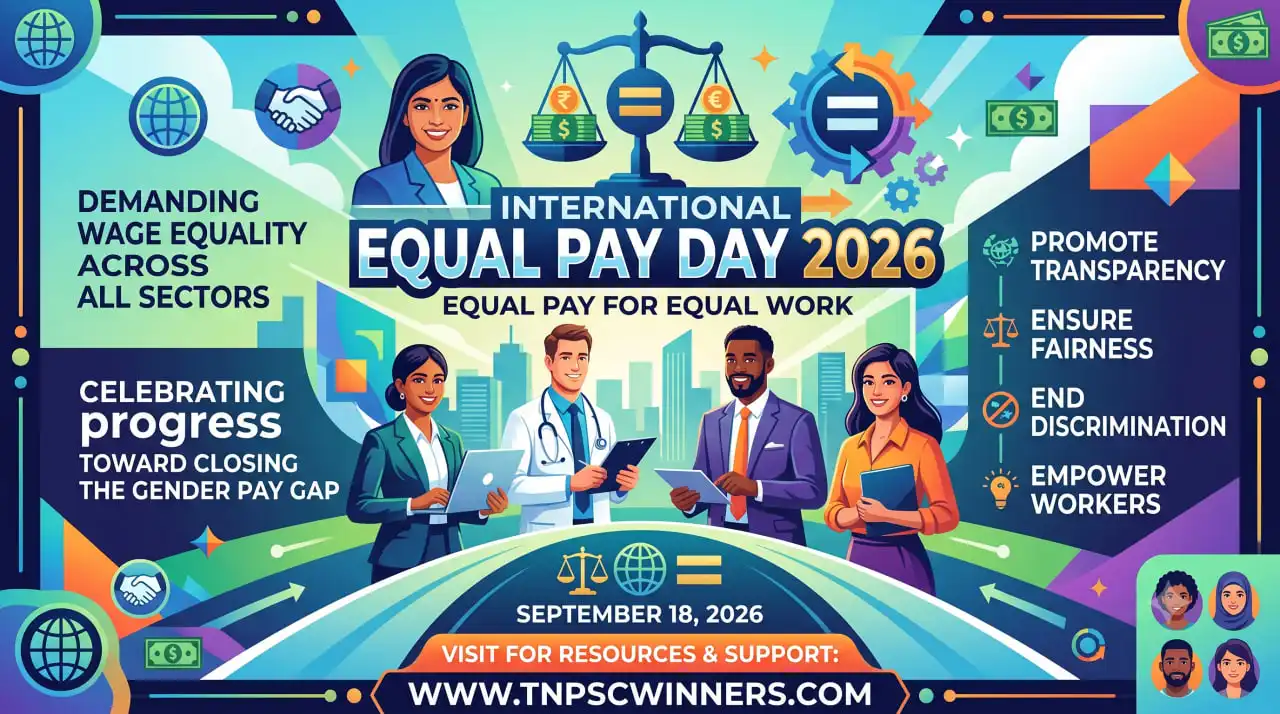
International Equal Pay Day: History & Importance
- International Equal Pay Day is observed annually on 18 September to promote the principle of equal pay for work of equal value and to raise awareness about the persistent gender pay gap.
- 18 September was recognized as International Equal Pay Day in 2020, making 2020 the first observance.
- International Equal Pay Day: History & Importance
JOIN OUR TELEGRAM CHANNEL – T.ME/TNPSC_WINNERS

What is Equal Pay?
- Equal pay for work of equal value means that remuneration should be determined according to the value of the work, rather than the worker’s sex.
- It covers not only identical jobs but also different jobs that are objectively assessed as being of equal value.
- This principle is embodied in ILO Equal Remuneration Convention, 1951 (No. 100).
- Factors used in objective job evaluation can include:
-
- Skills and qualifications
- Effort
- Responsibility
- Working conditions
-
Key Facts on International Equal Pay Day
|
Topic |
Details |
| Day | International Equal Pay Day |
| Date | 18 September |
| First observed | 18 September 2020 |
| Main focus | Equal pay for work of equal value |
| Major issue addressed | Gender pay gap |
| Key international organization | International Labour Organization (ILO) |
| UN connection | Gender equality and decent work under the SDGs |
| Important ILO Convention | Equal Remuneration Convention, 1951 (No. 100) |
| Key principle | Equal remuneration for men and women for work of equal value |
| Major international initiative | Equal Pay International Coalition (EPIC) |
Link with Sustainable Development Goals
Equal pay is closely connected with:
- SDG 5 – Gender Equality
- SDG 8 – Decent Work and Economic Growth
The UN recognizes equal pay for work of equal value as an important component of gender equality, decent work and women’s economic empowerment.
International Equal Pay Day: History & Importance
Constitutional & Legal Provisions in India
| Framework | Provision / Role |
| Article 39(d) (DPSP) | Directs the State to ensure equal pay for equal work for both men and women. |
| Article 14 & 15 | Guarantees equality before the law and prohibits discrimination on grounds of sex. |
| Equal Remuneration Act, 1976 | Prohibits discrimination in recruitment, promotion, and remuneration based on gender. |
| Code on Wages, 2019 | Amalgamates 4 labor laws (including the 1976 Act); strictly bars gender-based wage discrimination for the same or similar nature of work. |
International Equal Pay Day: History & Importance
International Equal Pay Day: History & Importance
TNPSC / Competitive Exam – One-Liners
- International Equal Pay Day – 18 September.
- It focuses on equal pay for work of equal value.
- First International Equal Pay Day – 2020.
- ILO Convention related to equal remuneration – Convention No. 100.
- Equal Remuneration Convention adopted – 1951.
- Gender pay gap = average difference in earnings between women and men.
- Women globally earn about 20% less than men on average, according to ILO/UN sources.
- EPIC = Equal Pay International Coalition.
- EPIC is jointly led by ILO, UN Women and OECD.
- Equal pay contributes to SDG 5 (Gender Equality) and SDG 8 (Decent Work and Economic Growth).
- Equal pay applies not only to equal work, but also to work of equal value.
- 18 September is the key date to remember for International Equal Pay Day.
International Equal Pay Day: History & Importance